01
A personal moment
 Junjie Song
A LITTLE HONESTY. A BETTER NEXT PURCHASE.
A playful digital space that turns online shopping regret into reflection, shared stories and a collective call for less waste.
Try the experienceWhat if that familiar regret could become a useful conversation?
“Sorry, I Bought Trash” invites young online shoppers aged 18–34 to admit an impulse purchase, share its story and see how it connects to a wider waste system. A playful tone opens the door; reflection and collective evidence give participation a purpose.
A personal moment
A public collection
A collective picture
The research follows a product beyond checkout. Cheap supply, constant promotion, convenient delivery and easy returns keep goods moving. Reuse and recovery ask for much more effort.
Low-cost production
Constant promotion
Frictionless checkout
Convenient delivery
Return, keep or discard
Research synthesis brings merchant, industry and consumer perspectives together. The intervention shifts attention from managing unwanted things to making their hidden consequences visible—while keeping platforms and sellers in the conversation.
These three boards trace the product journey, identify the barriers and locate the intervention. Together, they explain why a personal purchase becomes the starting point for a collective response.
Lilac, fluorescent yellow, internet humour and familiar shopping objects make the invitation approachable. Black type and simple choices keep the next step clear.
Clear words. Honest choices. Small moments of delight.

From a private moment of honesty to a public collection of stories. Explore the complete visual language, decisions and feedback across the experience.
A clear invitation. A short reflection. Something to keep.
A familiar regret opens the conversation.
An everyday purchase sets the scene.
One question. Two equally valid answers.
Separate the platform from the prompt to buy.
Connect a personal choice to a shared behaviour.
Humour closes the reflection without shame.
A nickname gives the result an owner.
A named certificate to save and share.
A forgotten object becomes part of a bigger picture.
Filter the objects that feel familiar.
Price, trigger and regret give an object context.
A photo, a title and a short story.
A contribution becomes a named exhibit.
Stories become visible shared patterns.
Connect reflection to platform responsibility.
Carry a different question into the next purchase.
The moment after an impulse purchase becomes the starting point. A familiar disappointment leads into a short confession, a useful insight and a different next choice.
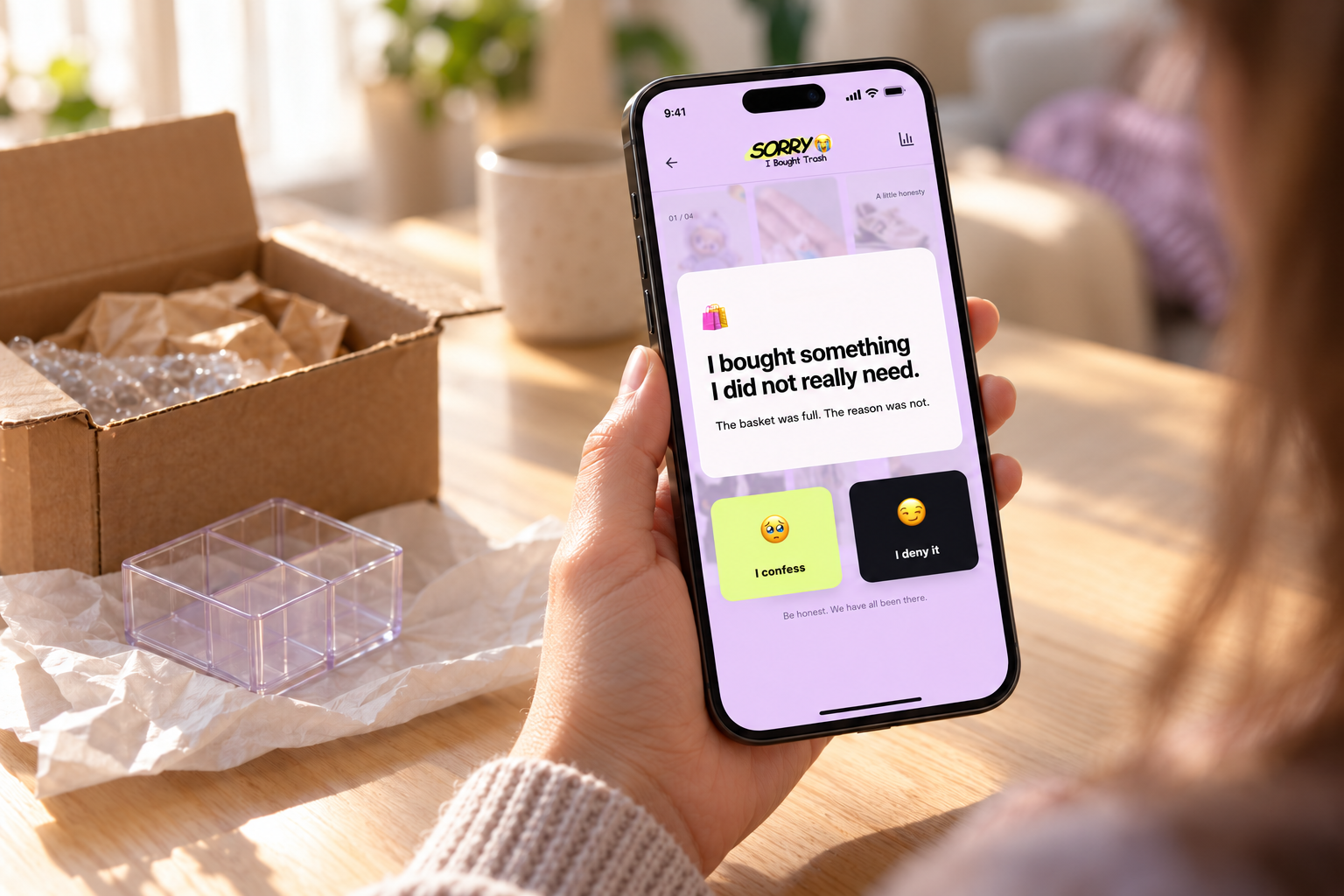
Recognise the purchase and its trigger.
Connect a personal choice to a wider pattern.
Give the forgotten object a story.
Carry the reflection into the next checkout.
Illustrative use scenario, created for the concept presentation.
A short story leads into familiar shopping confessions.
One clear choice at a time keeps reflection easy to start.
The flow separates recognising a behaviour from explaining it. Each screen asks for one kind of response, then makes the next step visible.
Four recognisable behaviours, one question at a time. Confess and deny are both valid routes; the visible progress gives the reflection a clear endpoint.
Platform and trigger are separate questions. Multiple triggers can be selected, with checkmarks and outlines reinforcing colour. Next becomes available after a choice.
A nickname turns the certificate into a personal takeaway. The downloadable result rewards participation and carries the playful tone beyond the final question.
Feedback connects a personal choice to a wider pattern. A playful moment of forgiveness rewards honesty, then a personalised certificate gives people something to keep and share.
Regretted purchases become exhibits. Browse the collection, discover the story behind an object and add a purchase of your own.
 Another blind box.
 Not quite the bargain.
A photo, a name and an honest story turn a forgotten thing into an exhibit card. The contribution gives the object a visible afterlife—and other shoppers a moment of recognition.
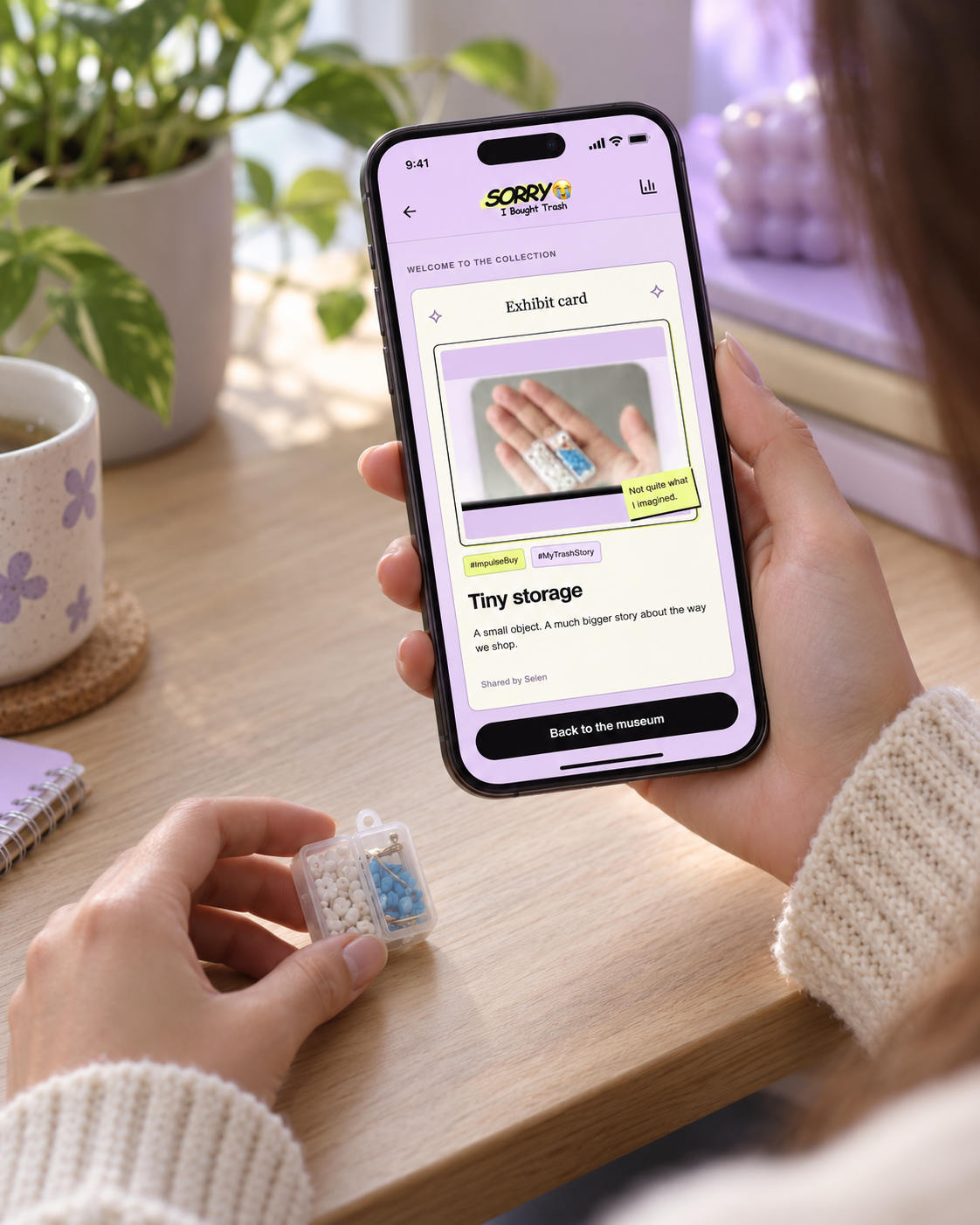
The museum makes an abstract waste system personal. An everyday object becomes the entry point; its price, purchase trigger and story add the context.
Image-led exhibits invite curiosity. Price and trend filters offer different routes into the collection, then a detail view reveals the story behind the object.
A photo, an exhibit name and a short story form the contribution. An empty photo area explains what to add; the resulting card keeps the same information together.
A named exhibit card acknowledges the contribution. Returning to the collection connects one person's regret to other familiar purchases.
Illustrative use scenario, created for the concept presentation.
The dashboard connects products, platforms, triggers and outcomes. A petition gives these individual stories a shared direction: more responsible online shopping practices.
Counts and percentages are sample data from the concept, rather than measured participation or impact.
The original concept points towards sustainable-shopping resources. The extended journey adds a pause, a closer look and practical alternatives before the next checkout.
The visual language opens the conversation. Clear hierarchy, explicit states and a consistent set of actions help people move through it.
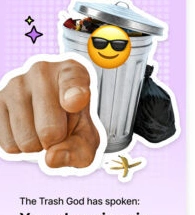
Internet humour and the Trash God make an uncomfortable subject easier to approach. The wording returns to the purchase and its consequences, keeping reflection at the centre.
Fluorescent yellow highlights the invitation. Black anchors the main action, while quieter links keep the museum and collective picture within reach.
A nickname, a title and a story personalise the result. Labels remain visible above the fields, and the exhibit card carries the contribution forward.
The dashboard and petition give the experience a collective destination. Personal responsibility stays connected to what platforms and sellers could change.
Dashboard figures illustrate the concept.Explore the confession, make a certificate, or give a forgotten purchase a place in the museum.
You are very much not alone.
So far,1,953people confessed🙏

Start with a familiar regret. Follow it through a confession, a moment of reflection and a certificate to keep.
Interactive concept · sample data · added screens extend the original PDF journey. Contributions stay in this preview.
The project brings system research, a participatory service concept, visual identity and a connected interface journey together. The portfolio extends the PDF screens into a consistent, interactive product demonstration.
The next step is to test participation, story moderation and the usefulness of collective evidence with advocacy partners.
DESIGN OUTCOME
The outcome is a participatory website concept connecting reflection, public storytelling, collective data and a reduce-waste call.
Explore the experience